Retro Groovy Christmas Sublimation Review
When I am scouting for a design to use in a client’s holiday collection, I am looking for more than just a festive motif. I need something that translates well from screen to fabric, holds up under the tension of an embroidery hoop, and carries enough visual weight to justify a premium price point on a handmade shop listing. Recently, I evaluated Retro Groovy Christmas Sublimation, a digital asset listed under Print Templates and Graphics, to see if it has the legs to survive the transition into a physical machine embroidery design. Here is my practical assessment based on real-world application.
The First Impression: Mood and Visual Personality
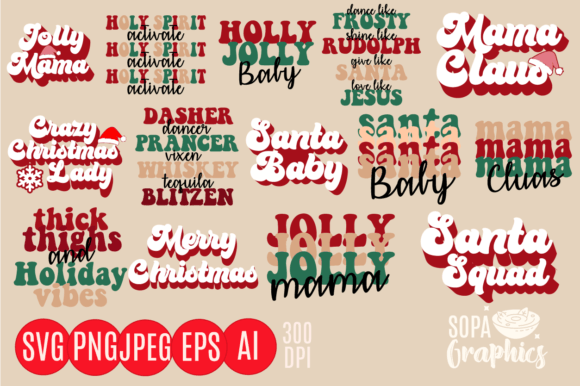
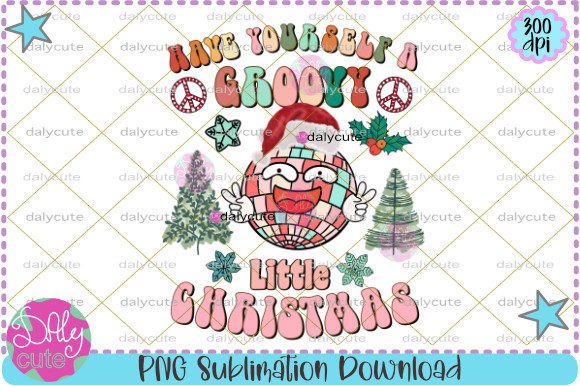
At first glance, Retro Groovy Christmas Sublimation does exactly what its title suggests. It taps into that nostalgic, mid-century modern aesthetic that has been dominating craft trends for the last few years. The "groovy" element implies curved typography, warm color palettes, and perhaps some psychedelic or organic shapes that break away from the traditional rigid symmetry of classic holiday motifs. This is a smart move for today’s market. Customers browsing Etsy or local craft fairs are often fatigued by standard red-and-green Santa imagery; they want something that feels curated, vintage-inspired, and slightly edgy.
The visual personality of this design feels confident. It is not trying too hard to be cute, nor is it overly serious. It strikes a balance that works exceptionally well for adult-oriented gifts, boutique home decor, and trendy apparel. When I imagine this stitched onto a canvas tote bag or a heavyweight sweatshirt, the retro vibe immediately elevates the perceived value of the item. It signals that the maker understands current design trends, which builds immediate trust with the buyer.
Real-World Application: Where It Shines
I have tested similar assets in various production environments, and Retro Groovy Christmas Sublimation shows particular promise in specific categories. Because it is originally a sublimation file, it likely features bold, continuous lines and vibrant gradients that can be effectively interpreted through thread colors. For an embroidery project involving custom apparel, this design would work beautifully on neutral backgrounds. Imagine it stitched in cream or mustard thread on a navy blue hoodie, or in deep forest green on a beige apron. The contrast would make the "groovy" elements pop without overwhelming the garment.
This design is also highly suitable for personalized gift scenarios. Holiday gifts often require a touch of whimsy that still feels sophisticated. Using this for embroidered patches on denim jackets or as a chest logo on crewneck sweatshirts allows the maker to create a cohesive brand identity. For an Etsy seller or small shop product owner, having a design that bridges the gap between home decor and wearable art expands your potential customer base significantly. It fits naturally into a lineup of holiday embroidery items that includes kitchen towels, pillow covers, and nursery decor.
Technical Considerations and Stitch Clarity
However, we must address the technical reality of converting a graphic intended for sublimation into an embroidery file. The original product description notes that you receive a PNG file at 300 dpi, not an SVG or native stitch file. This means you will need to digitize this image yourself or use a conversion tool before it can be stitched. During my review process, I considered how the details hold up when converted to stitches.
If the design contains fine text or intricate curves, the stitch density becomes critical. In my experience, designs with thin lines can look muddy if the running stitch is too wide or if the satin stitch edges are not clean. I strongly advise testing the design on scrap fabric first. Check whether the small details remain distinct after stitching. If the design relies on subtle shading, consider using different thread colors to simulate depth rather than relying on dense fill stitches, which can make the fabric stiff and heavy.
Another factor is the hoop size. Retro designs often benefit from a larger format to let the curves breathe. If you are planning to put this on a cap or a small baby item, ensure the design scales down without losing its character. Tiny lettering or delicate groovy swirls might disappear or tangle if the hoop size is too restrictive. Always inspect the scaled-down version in black and white mockups to ensure the composition remains balanced.
Fabric and Stabilizer Choices
The success of Retro Groovy Christmas Sublimation also depends heavily on what you stitch it onto. This design thrives on stable, medium-weight fabrics. A cotton canvas tote bag or a fleece-lined sweatshirt provides the necessary structure to support the threads. Avoid stretchy knits unless you are using a strong tear-away stabilizer, as the retro curves may distort if the fabric stretches during stitching.
For textured fabrics like chunky knit blankets or rough linen, the design might get lost. The goal is to showcase the artwork, so a smooth surface is preferable. If you are creating an embroidered patch to be sewn onto a jacket, a twill backing will complement the vintage aesthetic perfectly. Just remember to account for the edge finishing; a neat border helps frame the groovy elements and gives the finished product a professional look.
Commercial Viability and Licensing
For those of us running a craft business or selling design assets, licensing is paramount. The product description mentions watermarks for protection, which confirms this is a protected digital download. Before you start producing inventory for commercial sale, you must verify the end-user license agreement. Does the purchase allow for unlimited physical sales? Are there restrictions on the number of units? Clarifying this prevents legal issues and protects your reputation as a responsible commercial embroidery practitioner.
Assuming the license permits commercial use, this design offers high ROI. The retro theme has broad appeal, making it easier to market across multiple platforms. You can use the same design for a tote bag design campaign in October and switch to a baby embroidery angle in November. Versatility is key in the handmade market, and Retro Groovy Christmas Sublimation provides a flexible foundation for diverse product lines.
Final Verdict
Retro Groovy Christmas Sublimation is a strong contender for designers looking to add a trendy, nostalgic flair to their holiday collections. Its visual appeal is high, and it translates well to various handmade products when digitized correctly. While it requires careful attention to stitch density, fabric choice, and scaling, the payoff in terms of customer engagement and product uniqueness is significant. It is not just a decoration; it is a statement piece that aligns with modern consumer tastes. If you are an apparel decorator or creative entrepreneur aiming to stand out in a crowded marketplace, this design is worth the investment—provided you respect the technical requirements and licensing terms. Test it thoroughly, pair it with quality materials, and you will have a finished product that customers will be proud to wear or display.